
Artificial intelligence spending is truly exploding. IDC estimates that worldwide AI investments will reach $631 billion by 2028. Still, a lot of enterprise AI initiatives fail even before they get to production.
The reason is quite clear: companies continue treating AI systems pretty much like traditional software programs themselves.
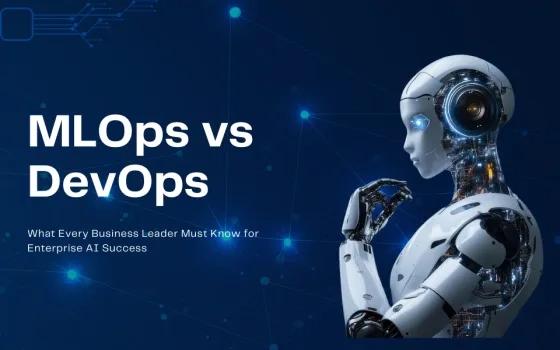
The MLOps vs DevOps discussion isn't just about tools. Really, it's all about understanding how AI systems work very differently indeed. DevOps deals with code and infrastructure. MLOps have to manage code, data, and models - all at the same time.
Traditional software behaves fairly predictably. When it passes testing today, it should act similarly tomorrow. AI models function totally differently. Customer behavior changes continuously. Market conditions shift all the time. Data keeps evolving. Models degrade over time itself.
This brings up some real challenges that standard DevOps pipelines really can't handle:
• Data drift affects prediction accuracy all the time
• Model performance actually declines very quietly
• Retraining becomes practically necessary every day
• Data versioning becomes almost as crucial as code versioning itself
Software failures are usually rather noticeable. AI failures are often unseen really.
Your application might just keep on running, but your recommendations get worse, your fraud detection gets weaker, or your prediction accuracy steadily drops all the time.
That is why enterprises are relying more and more on Continuous Training pipelines, drift detection, ML monitoring, and specialized MLOps frameworks themselves.
Here at MoogleLabs, we help organizations bridge the gap between experimentation and large-scale production AI through enterprise MLOps strategies specifically designed for long-term reliability indeed.












Write a comment ...