
Creating a machine learning model really is just the beginning. The true challenge begins when companies try to put AI into actual real-world use cases. As highlighted in this MLOps guide, lots of AI projects don't really fail while they're being developed. They fail later on after they've been deployed - when models start to see changes in customer behavior, evolving data patterns, and a shifting market landscape.
An algorithm trained on past data will work pretty well at first - but overtime its performance will actually decrease because of model drift. Fraud detection systems, recommendation engines, and forecasting models all deal with this problem. Without ongoing monitoring, retraining, and good governance, even the best performing models will eventually be unreliable itself.
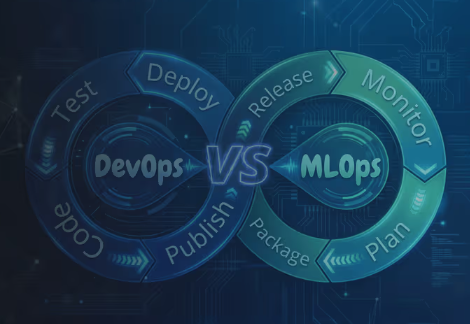
This is where MLOps really becomes essential. MLOps combines machine learning practices with DevOps principles to develop systems for deployment, monitoring, and lifetime management in a very repeatable way. Rather than treating AI like a one-time project, organizations build structured pipelines that manage your data, your models, and your infrastructure all together.
Key capabilities such as experiment tracking, feature stores, model registries, and automated deployment pipelines really help teams move AI from isolated experiments to much more scalable business systems.
Companies implementing MLOps get faster deployment cycles, lower operational overhead, and a lot more reliable model performance. AI success isn't measured by building models anymore. It's really measured by sustaining performance in actual production environments.
As AI adoption really goes up, operational maturity is what makes the difference between experimental systems and long-term business value itself.
#MLOps #ArtificialIntelligence #MachineLearning #DevOps #AIInfrastructure #EnterpriseAI #DigitalTransformation



















Write a comment ...