
Most enterprise AI conversations really concentrate on developing even bigger - and very capable - models through training. Nonetheless, when an AI application finally gets to production, the actual challenge really becomes inference. In fact, most of an AI system's whole compute budget over its lifetime is actually used serving live requests rather than training the model itself. As user demand grows, companies quite often face much higher latency, significantly greater infrastructure costs, and less-than-efficient hardware use.
A highly effective AI inference infrastructure is actually designed to manage these production workloads really well. It combines specialized hardware, optimized inference runtimes, orchestration platforms, and observability tools so as to deliver very-low-latency responses at scale. Unlike training clusters that put a high priority on large-batch processing, inference environments have to process very-unpredictable, real-time requests - all while keeping very-tight service level agreements intact.
To get around production bottlenecks, companies are adopting all sorts of optimization techniques such as precision quantization, continuous batching, model pruning, and automated autoscaling. These methods decrease memory usage, enhance GPU utilization, increase throughput, and greatly reduce operational expenses - all without sacrificing any model accuracy whatsoever.
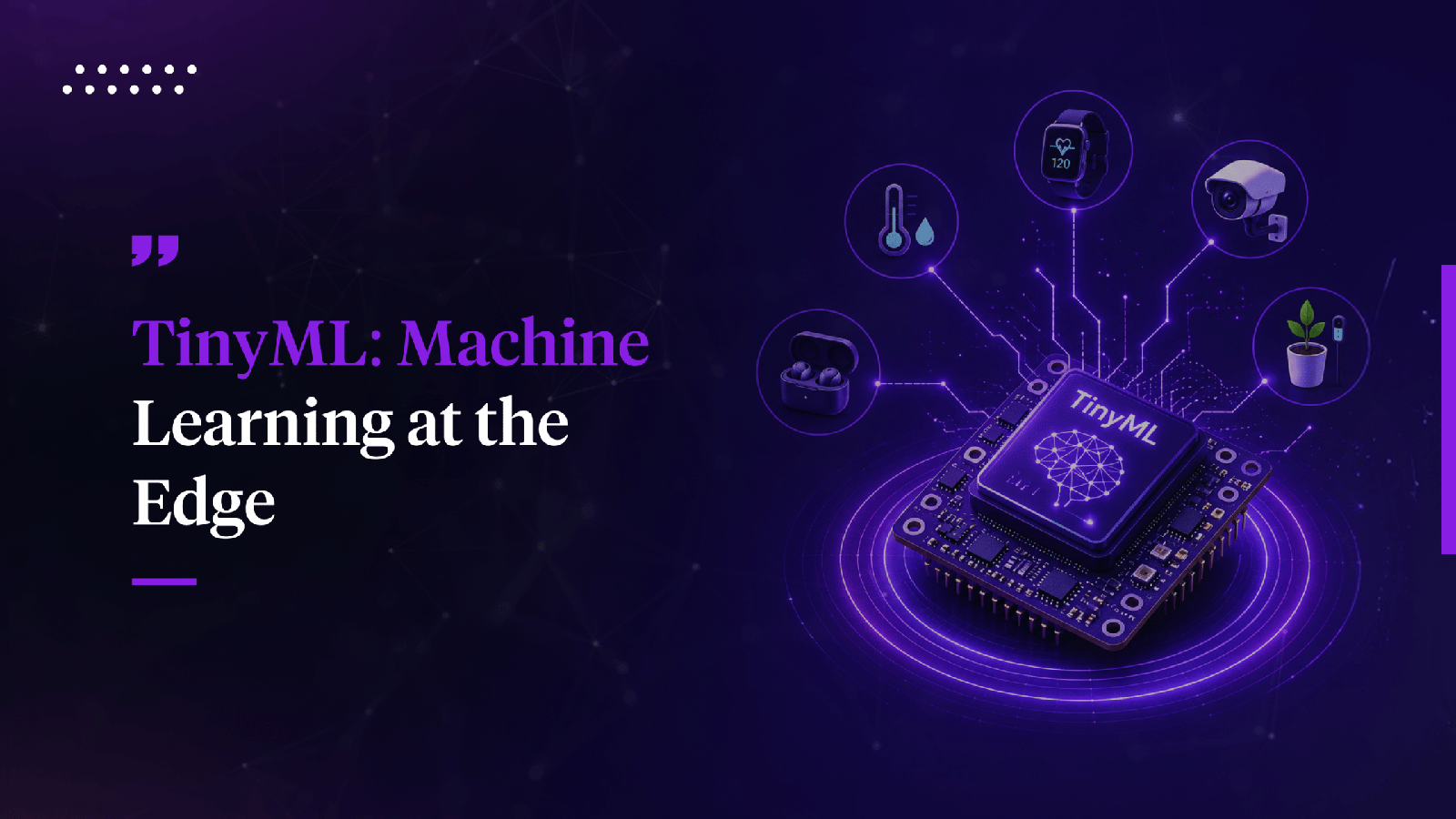
Your deployment strategy also really counts a lot. While cloud-native environments offer incredible elasticity, edge deployments decrease latency for real-time applications - and hybrid architectures strike a nice balance between performance, cost, and data sovereignty itself.
Enterprise AI success isn't measured solely by how good your model is anymore. It actually depends on creating an infrastructure that can deliver very-fast, very-reliable, and very-cost-efficient inference in production. Companies that really optimize their inference infrastructure today will be way better prepared to scale their AI applications tomorrow.


















Write a comment ...