
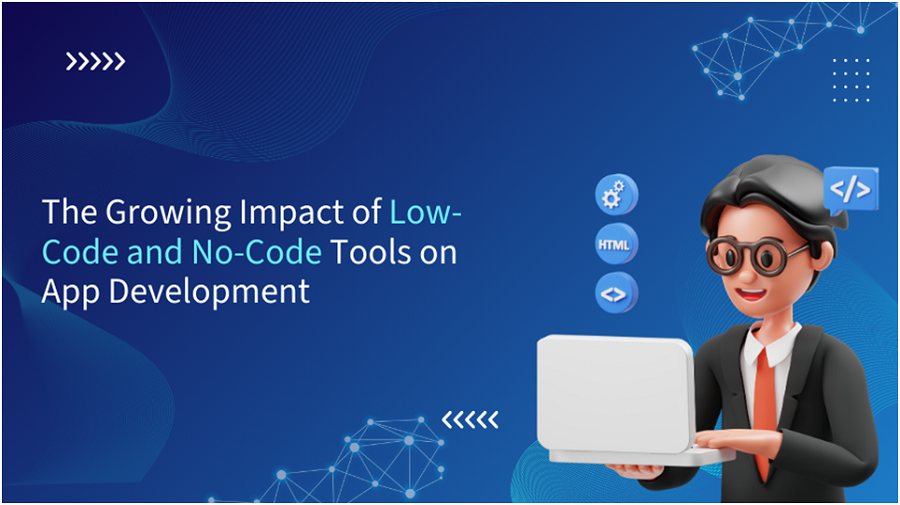
Software backlogs choke enterprise progress. When businesses keep submitting tickets for internal dashboards, customer portals, and workflow automation, time to build proprietary products vanishes.
Traditional coding is no longer enough. Hence, enterprises are shifting to low-code/no-code technologies.
By replacing manual syntax with visual modeling, these platforms allow cross-functional teams to launch reliable tools in days. Professional engineers retain control over core system logic, freeing technical talent to focus on architectural stability.
Architectural Mechanics: Low-Code/No-Code Development Versus Bespoke Engineering
The core difference between manual coding and Low-Code/No-Code frameworks centers on abstraction. Bespoke software engineering requires manual configuration across databases, custom libraries, security protocols, and server environments. Low-code platforms abstract routine infrastructure into visual blocks that compile directly into standard production components.
Visual assembly enables cross-functional teams to build operational workflows fast. Pre-configured modules maintain interface consistency across departments, reducing syntax errors and routine logic bugs. Non-technical builders assemble department-level tools, allowing specialized engineering units to concentrate on high-throughput backend services and core microservices.
Visual development changes standard software workflows across several operational layers:
Visual Configuration: Developers connect pre-built user interfaces, data structures, and business rules using intuitive drag-and-drop canvases.
Automated Infrastructure: Cloud platforms handle hosting, load balancing, continuous integration, and runtime management behind the scenes.
Standardized Components: Reusable modules enforce design uniformity across corporate portals and external customer touchpoints.
Version Management: Integrated rollback features protect live environments against accidental configuration errors.
Low code application development shortens project lifecycles without sacrificing software quality. Teams publish updates across web and mobile platforms from a single visual canvas, cutting out repetitive boilerplate code. This acceleration helps organizations respond to immediate market shifts without adding overhead to IT departments.
Bespoke development remains necessary for specialized algorithms and systems with unique compute requirements. Still, building standard forms and data routing mechanisms from scratch wastes valuable technical hours. Visual frameworks take over routine tasks so senior developers can focus on intricate challenges.
The Convergence with Enterprise AI Solutions
Visual development capabilities expand further through integration with enterprise AI solutions. Modern systems apply generative artificial intelligence to convert plain-language instructions directly into operational user interfaces, data structures, and backend connections.
This pairing creates a collaborative building environment between human operators and intelligent systems. Machine learning models generate interface templates, suggest workflow connections, and draft basic validation logic. Autonomous multi-agent systems coordinate multi-step workflows across distributed corporate databases with minimal manual intervention.
Intelligent low-code platforms support multiple advanced capabilities:
Conversational Interfaces: Non-technical staff query corporate data through natural language prompts instead of writing complex SQL queries.
Adaptive Automation: Smart triggers route approval requests based on real-time business criteria and historical patterns.
Schema Discovery: Visual systems suggest API connections and table relationships automatically.
Automated Code Reviews: Built-in assistants identify logic errors and configuration gaps before applications reach staging environments.
Combining visual builders with intelligent machine learning transforms internal operations. Software shifts from static data entry screens into responsive tools that adapt to daily user activity. Department leads can build intelligent ticketing systems, predictive inventory trackers, and automated client triage platforms without writing backend code.
This integration aids experienced developers. Programmers use natural language prompts to scaffold database schemas or generate test datasets in seconds. Visual low code development acts as an intelligent accelerator for every technical skill level across the organization.
Operational Governance and Technical Boundaries
Visual platforms introduce real challenges inside enterprise systems. Unchecked citizen development creates shadow IT risks. When business units deploy tools without IT oversight, unmonitored data stores and security gaps appear across the company.
Security issues arise when builders misconfigure access permissions on sensitive corporate records. Proprietary runtime architectures can lock companies into a single vendor's ecosystem, complicating future system migrations. Abstracted execution layers can introduce latency, making pure visual platforms unsuitable for high-frequency financial transactions or high-load streaming operations.
Connecting visual tools to legacy mainframe systems presents another technical hurdle. Outdated architectures require custom middleware layers that drag-and-drop builders cannot generate on their own. Enterprise teams must maintain data sovereignty, field encryption, and regulatory compliance standards across every endpoint.
Managing these operational risks requires clear governance policies:
Centralized Access Management: IT teams enforce multi-factor authentication and role-based permissions across every visual application.
Component Whitelisting: Developers create pre-approved API connectors and interface templates for citizen developers to use safely.
Automated Compliance Auditing: Security tools monitor data access, tracking database modifications across platforms in real time.
Contract Testing: Engineering teams verify that backend schema changes do not break citizen-built frontends.
Application sprawl represents another risk. When dozens of employees build independent apps to solve identical problems, maintenance overhead multiplies. Establishing an internal center of excellence helps organizations audit active tools, retire outdated prototypes, and maintain a clean digital footprint.
Building the Hybrid Engineering Model
Teams get the best outcomes by pairing visual app builders with custom backend systems. Teaming up with an experienced AI/ML development company gives companies the technical muscle to connect no-code interfaces to proprietary machine learning pipelines and legacy enterprise databases. This setup delivers fast turnaround times without putting core data structures at risk.
The division of labor is straightforward. Business operators sketch out screens and assemble standard user flows. Meanwhile, professional engineers handle data governance, API design, and system security. Non-technical workers fix their own daily workflow headaches, which keeps technical debt from quietly piling up behind the scenes.
Platform engineers step in by creating shared UI blocks and pre-vetted data connectors. Citizen builders simply grab these verified assets to construct their tools, keeping every app aligned with enterprise security policies. At the same time, IT tracks application health, user logins, and operational metrics through a single dashboard.
A warehouse manager might assemble a parts tracking board in three days. Once the workflow proves its worth, engineers wire it directly into production APIs and secure event queues for scale.
Strategic Trajectory for Enterprise Applications
Low-Code/No-Code platforms will not replace traditional programming. Visual platforms establish a practical abstraction layer that redefines software delivery models. Visual systems accelerate internal portals, routine data collection, and workflow automation. Bespoke software engineering remains the standard for specialized computing, high-concurrency services, and proprietary algorithms.
The future of software development relies on combining visual tools, artificial intelligence, and disciplined engineering governance. Organizations that establish structured frameworks for visual development achieve fast delivery cadences, controlled development costs, and lasting operational agility.
Leaders who set distinct boundaries between citizen-built frontends and custom core infrastructure will outpace competitors in execution speed. Bringing visual builders and machine intelligence into a unified engineering workflow creates a dependable foundation for enterprise software.













Write a comment ...