
Static reporting is no longer enough to navigate rapidly shifting market conditions. Modern businesses are shifting away from historical dashboards, toward active forecasting systems that predict changes before they happen. Today, implementing advanced predictive analytics solutions is not just a technological upgrade - it is a core strategic priority. Understanding the key factors influencing this environment allows firms to allocate capital more effectively, streamline everyday routines, and develop long-term operational resilience.
Shift to Real-Time Streaming and Edge Intelligence
In legacy architectures, data engineering relied heavily on batch processing. Systems collected transactional logs throughout the day and ran statistical models overnight. Modern operations cannot afford a twenty-four-hour delay in decision-making. The dominant trend across enterprise computing is the rapid shift toward real-time telemetry processing at the network edge.
By executing statistical algorithms directly on point-of-sale systems, and client-facing digital platforms, operational delays are reduced from hours to milliseconds. This change enables systems to initiate quick remedial procedures when abnormalities arise.
Key operational advantages of real-time processing include:
Dynamic Pricing Adjustments
Instantaneously recalculating price points based on live demand spikes and localized inventory levels.Automated Operational Safeguards
Catching equipment drift or transactional anomalies immediately to prevent cascading downtime.Personalized Digital Interactions
Triggering tailored recommendations during an active user session rather than via post-session marketing follow-ups.
Recent enterprise research confirms that 76% of organizations now view real-time data analytics as essential to maintaining baseline performance. Transitioning from static batch reporting to streaming intelligence requires modular predictive analytics solutions that integrate directly into existing message buses and data pipelines.
Fusion of Generative AI and Quantitative Forecasting
Historically, quantitative data modeling and qualitative text synthesis functioned in isolated domains. Data science teams built regression models to generate numeric outputs, while communications teams managed narrative content. Today, modern data architectures unite quantitative forecasting engines with large language frameworks.
Conversational Intelligence and Scenario Simulation
When quantitative algorithms generate complex numerical forecasts, integrated language models automatically translate those arrays into actionable strategy briefs. Rather than understanding complex probability curves, decision-makers receive plain-language summaries explaining why a specific supply chain bottleneck is emerging.
Furthermore, this convergence enables natural language scenario modeling. Leadership can query an internal analytics portal using simple text prompts - asking how a ten percent increase in raw material costs will affect quarterly margins and receive immediate probabilistic forecasts backed by underlying machine learning algorithms. Deploying unified enterprise AI solutions bridges the gap between deep data science and daily strategic execution.
Vertical-Specific Customization and Precision Modeling
Standard off-the-shelf statistical models often lack the context required to operate effectively within specialized corporate environments. Generic models struggle with domain-specific edge cases, regulatory compliance constraints, and nuanced operational structures. Consequently, the industry is shifting rapidly toward vertically tailored algorithmic frameworks.
Tailored Financial Risk and Operational Intelligence
A prime example of this trend is the deployment of predictive analytics in FinTech. Modern financial platforms utilize bespoke machine learning models to perform sub-second credit risk evaluations, isolate sophisticated fraudulent transaction schemes, and automate liquidity forecasting under volatile market conditions.
By training models on sector-specific datasets and embedding domain rules directly into feature engineering pipelines, organizations achieve vastly higher forecast precision and lower false-positive rates. Advances in demand planning, clinical resource allocation, and industrial predictive maintenance are being propelled by similar domain-tuned models.
Closed-Loop Prescriptive Execution
Predicting future outcomes provides clear strategic value, but the ultimate business impact occurs when predictions trigger immediate, optimal actions. The market is rapidly evolving beyond passive prediction toward closed-loop prescriptive decision engines.
Automating Operational Responses
Prescriptive architectures do not simply inform leadership that a logistics delay is likely - they automatically evaluate alternative shipping routes, calculate cost trade-offs, and re-route inventory in real time.
Key benefits of combining predictive and prescriptive architectures include:
Cost Optimization
Automatically adjusting resource allocations to eliminate unnecessary overhead.Revenue Protection
Identifying potential churn risks early and automatically deploying targeted retention workflows.Supply Chain Resilience
Rebalancing warehouse stock levels dynamically to fulfill unexpected regional demand surges.
Empirical enterprise studies reveal that implementing a data-driven decision infrastructure delivers an average 8% increase in revenue alongside a 10% reduction in total operating costs.
Capitalizing on these efficiencies requires a modern machine learning solution engineered to connect probabilistic models directly to enterprise execution engines. Integrating reliable predictive analytics solutions allows organizations to transform raw forecasts into automated, high-margin operational decisions.
Robust MLOps and Continuous Learning Pipelines
Deploying a statistical model to production is only the beginning of its operational lifecycle. Over time, changes in market dynamics, consumer habits, and supply chain realities cause model performance to decay - a challenge known as model drift. Without continuous oversight, an algorithm that delivered high accuracy six months ago can quickly begin making costly miscalculations.
Building Scalable Machine Learning Pipelines
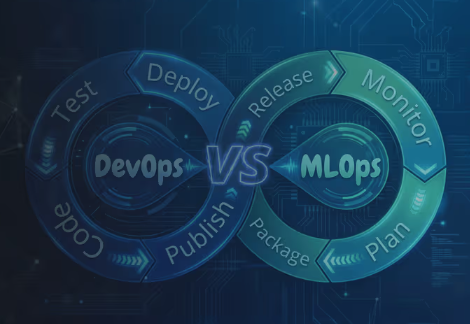
To maintain long-term accuracy, enterprise data teams are prioritizing Machine Learning Operations (MLOps). Modern MLOps frameworks provide continuous telemetry, automated drift detection, and hands-free retraining loops.
When evaluating next-generation analytics infrastructure, organizations must evaluate structural capabilities across the entire data lifecycle:

Technical expertise is needed to build and keep these complex pipelines running. Working with a proven AI/ML development company means that custom ML solutions are built for enterprise scale, data security and long-term stability. Consistent business intelligence is delivered, and technology investments are protected when businesses invest in well-governed predictive analytics solutions.
Explainable AI (XAI) and Model Governance Take Center Stage
As predictive systems take on higher-stakes decisions, the "black box" nature of early deep learning models presents significant regulatory and legal liability. Regulators and risk committees now demand transparency into why a model reached a specific output.
Operational efficiency gains between 20% and 30% are routinely achieved when transitioning to automated real-time predictive workflows. However, capturing these returns safely requires governance frameworks that prevent silent drift and algorithmic bias.
Modern model governance relies on several core components:
Feature Attribution Frameworks
Utilizing tools like SHAP (SHapley Additive exPlanations) and LIME (Local Interpretable Model-agnostic Explanations) to show exact variables driving individual predictions.
Continuous Bias and Fairness Monitoring
Evaluating live inference data to discover before they affect customer relationships or regulatory compliance.
Audit Trails and Lineage Tracking
Keeping a thorough record of each automated training data, feature engineering versions, and model weights.
Choosing transparent ML solutions over opaque architectures ensures compliance while maintaining stakeholder trust.
Conclusion
The transition from historical reporting to forward-looking, continuous decision engines represents a defining competitive advantage in modern enterprise strategy. Organizations that modernize their predictive analytics solutions stack, embrace real-time processing, and automate routine operational adjustments position themselves for resilient growth. Implementing robust prediction pipelines requires clear technical direction and expert engineering execution. Adopting these predictive analytics trends today ensures your enterprise remains agile, profitable, and prepared for future disruptions.










Write a comment ...